
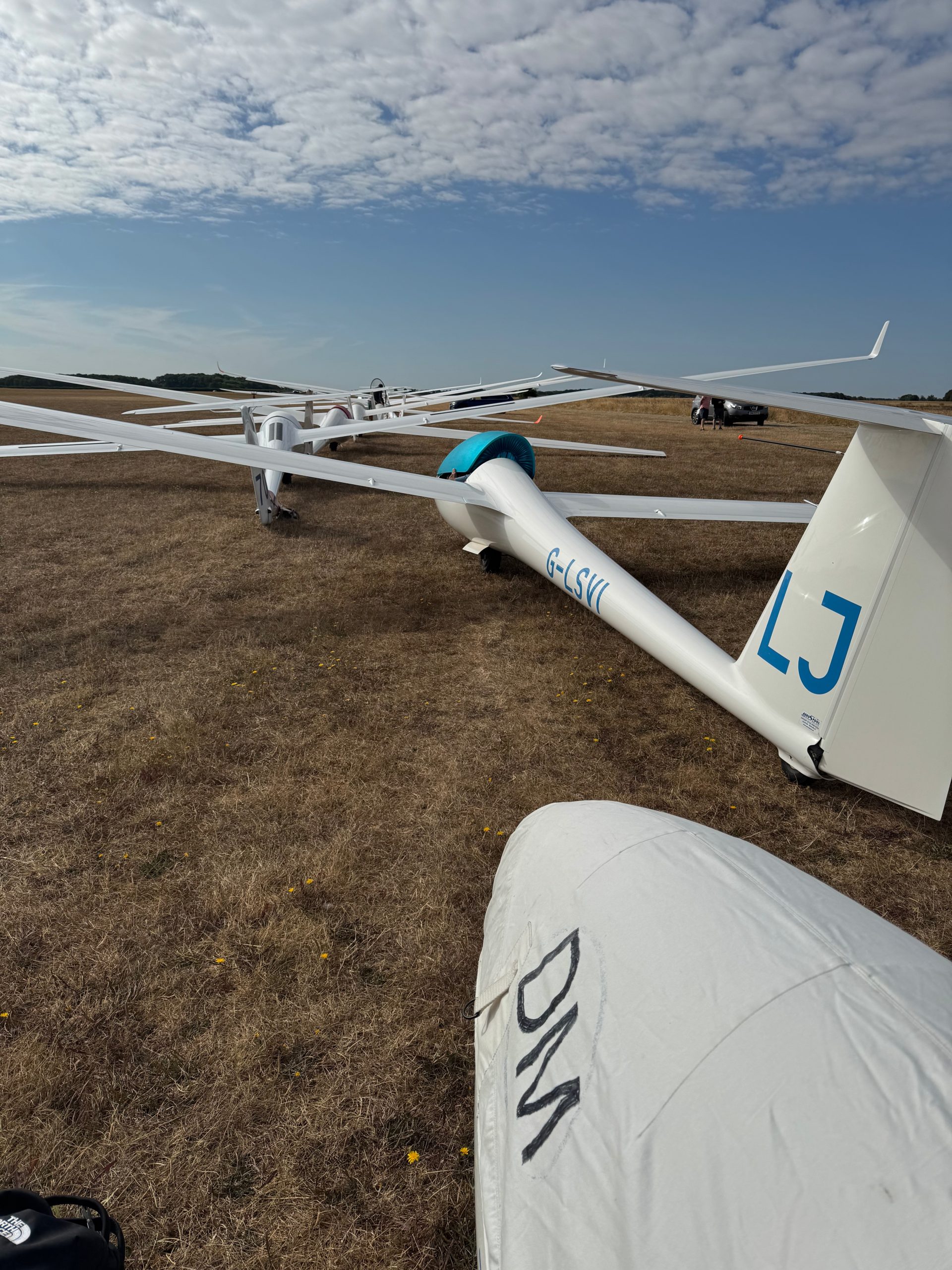
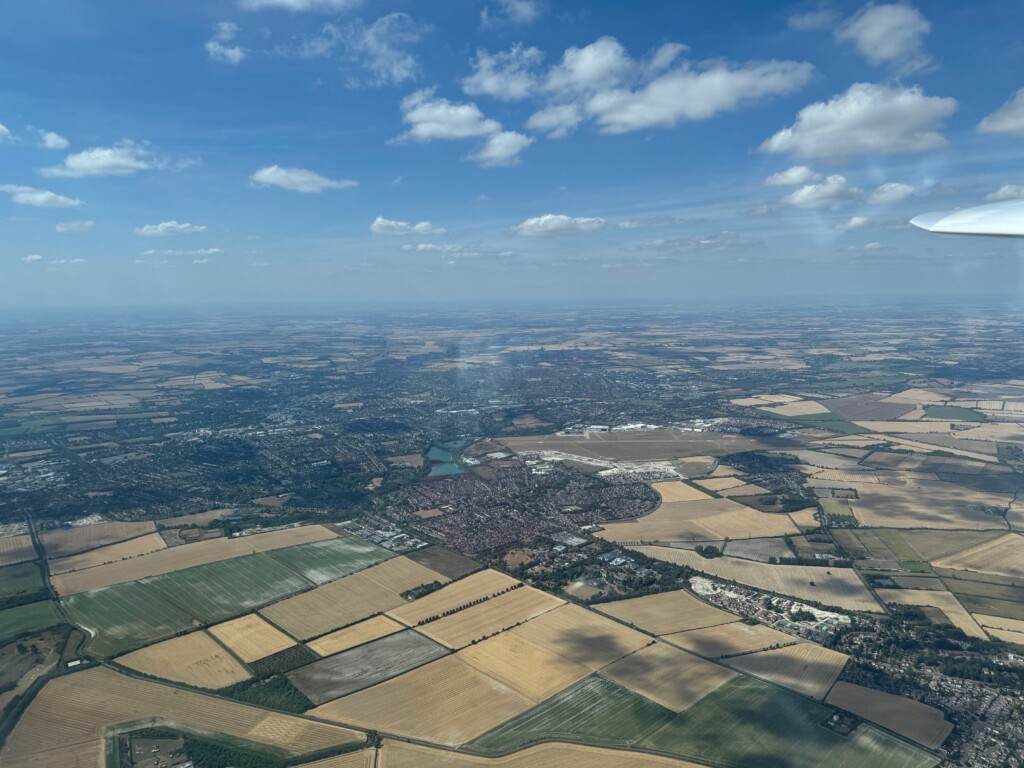
Another fantastic Cambridge Cloud Rally came to an end at Gransden Lodge on Sunday 9 August, bringing nine days of flying & competition to a close.
And 2026 gave us plenty of flying.
Thirty-four pilots and teams took part, with cross-country flying possible on eight of the nine days. Between them they covered 43,100 kilometres, spent 890 hours in the air and made 415 launches. Forty-four flights were longer than 300 kilometres.
Those are impressive numbers, but they do not entirely explain what the Cloud Rally is about.
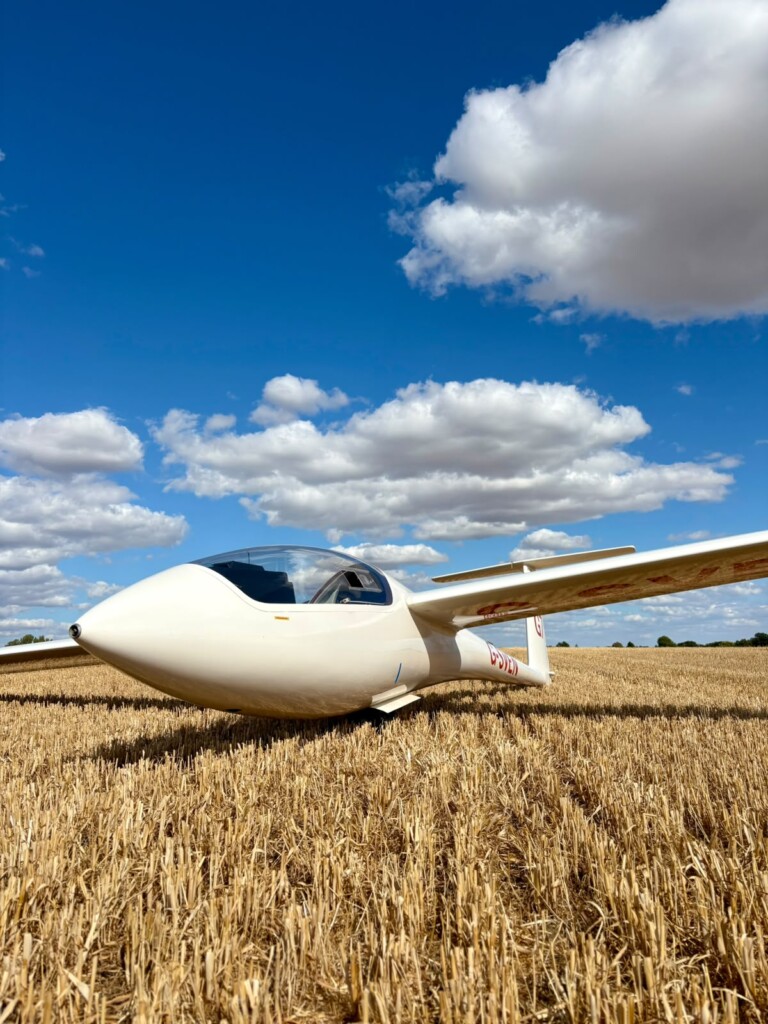
A competition, but not quite as you know it
The Cloud Rally is Cambridge Gliding Centre’s annual attempt to do a gliding competition a little differently.
It is deliberately informal. The rules are kept straightforward, the emphasis is firmly on safe flying, and the event is designed to include pilots with a wide range of experience.
As the organisers reminded competitors before the start: “This is not the Nationals.”
For somebody who has never encountered competition gliding before, the basic idea is fairly simple. On a good soaring day, a glider pilot can use rising air to climb and then set off across country, gliding between areas of lift and covering hundreds of kilometres without using an engine.
A competition adds a task and a score. Pilots might be trying to cover a particular route, fly as far as possible or complete the day’s challenge more quickly than their fellow competitors.
The Cloud Rally keeps that essential challenge, but tries to keep much of the formality out of the way.
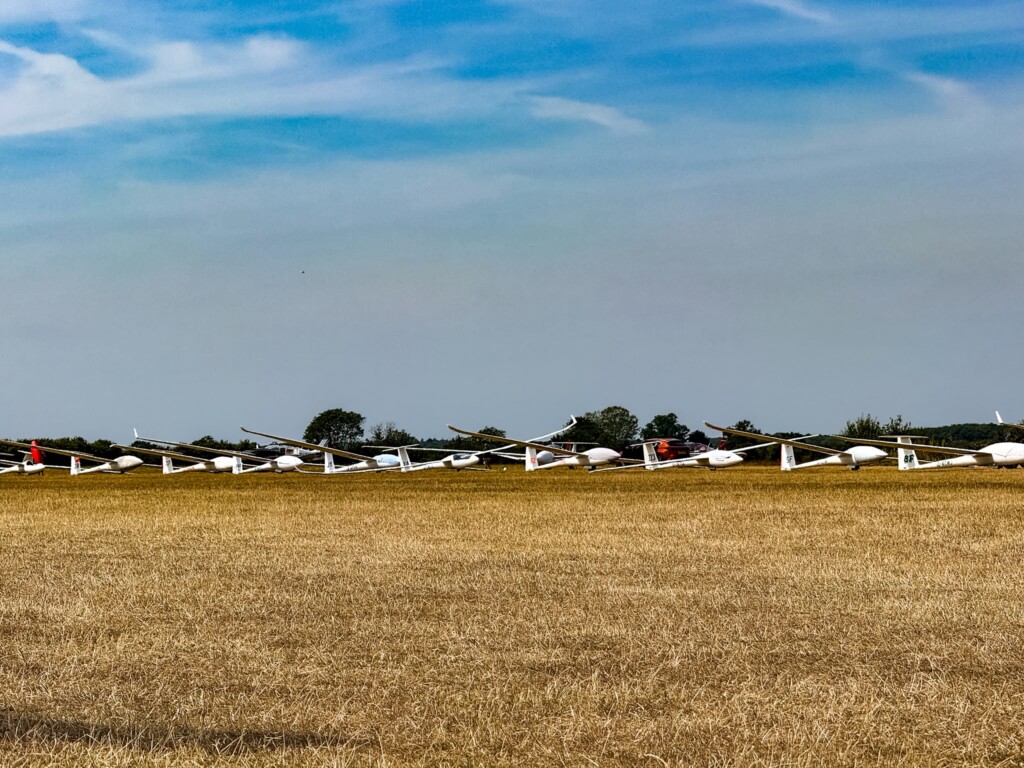
There is no official competition grid, for example, and pilots have flexibility over when and how they launch. Depending on the aircraft and the pilot, that might mean a winch launch, an aerotow behind a powered aircraft, or self-launching in a glider fitted with its own means of getting airborne.
Meanwhile, normal club flying continues around the competition, including training.
Racer, Funster and Tyro
One of the things that makes the Cloud Rally unusual is the range of pilots it is intended for.
Competitors fly in one of three classes: Racer, Funster and Tyro.
At one end are the Racers: the pilots for whom speed, distance and getting the most out of the day are a large part of the attraction.
At the other are the Tyros, where the emphasis is much more on encouraging pilots who are newer to this kind of flying to take part, stretch themselves and gain experience.
The organisers are deliberately flexible about how Tyros are scored. As the pre-event briefing put it, worthwhile exploits sometimes appear during the week that nobody thought to write into the rules beforehand. The scoring can therefore be adjusted to recognise them fairly.
And flying is not the only way to distinguish yourself. Tyros were reminded before this year’s event that “usefulness, as well as flying exploits, can win prizes.”
That probably tells you as much about the Cloud Rally as any formal rulebook could.
Safety first, competition second
The relaxed approach does not mean a relaxed attitude to safety.
Quite the opposite.
The 2026 briefing made it clear that the Cloud Rally Director could apply penalties for poor airmanship, particularly where it might set a bad example to newer club members.
That matters when pilots with very different levels of experience are sharing the same sky. Competition can encourage people to push themselves; the Cloud Rally is designed to make sure that does not come at the expense of sensible flying.
There was even an unusual additional rule this year. With a hosepipe ban in force, competitors were asked not to fly with water ballast.
Some high-performance gliders can carry water to alter their flying characteristics, but the organisers decided it would be unfair if only some competitors were able to bring water from elsewhere.
More than nine days of scores
The flying is only one part of the week.
This year’s programme also included boules and croquet, board games, a film night, a fish-and-chip supper, a quiz, an evening of stargazing, a barbecue and, finally, Sunday’s prize-giving.
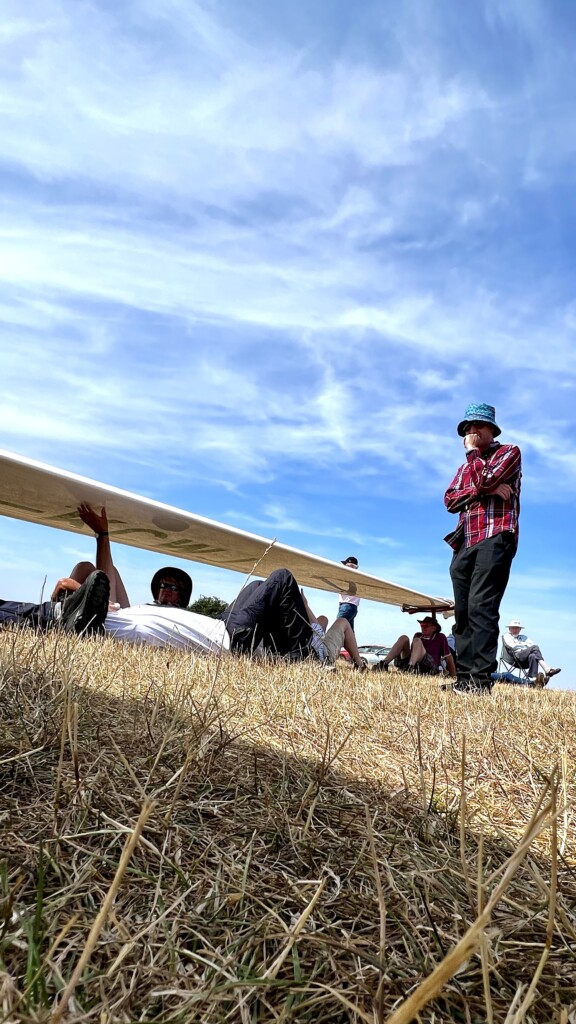
That social side is important. The Cloud Rally is a competition, but it is also a week in which people fly together, help with launches and retrieves, compare stories from the day’s flying and spend rather more time than usual at the airfield.
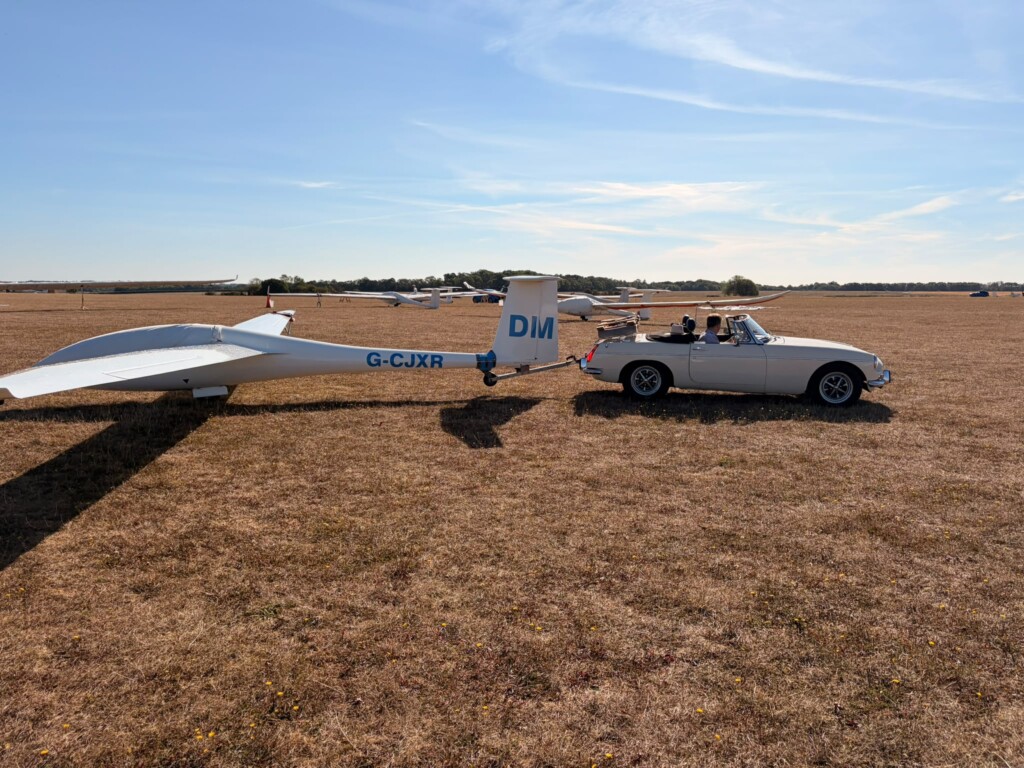
And when somebody does not quite make it back to Gransden Lodge, there is a mutual retrieve system to help collect pilot and glider from wherever they have landed.
All of that depends on volunteers. The Rally is not run as a fully staffed competition, and competitors and club members help keep the operation moving throughout the week.
Cloud Rally 2026 in numbers
By the end of Sunday, the totals looked like this:
- 34 pilots and teams
- 8 cross-country flying days out of 9
- 43,100 km flown
- 44 flights of more than 300 km
- 890 glider hours
- 415 launches
Behind those numbers were nine days of pilots trying something new, chasing better flights, helping each other out and, occasionally, taking the competition very seriously indeed.
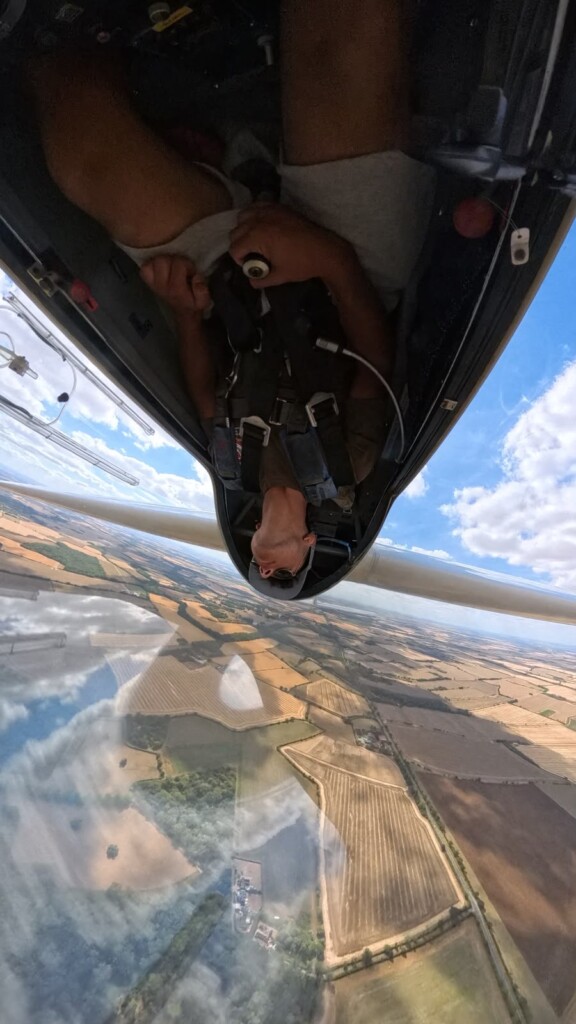
Just not too seriously.


